
Are Advertisers Paying Attention?
Article summary:
New Zealand’s commercial audio audience reached 3.496 million weekly listeners in GfK Survey 1 2026, with growth led by younger audiences.
Younger New Zealanders are listening across radio, streaming and podcasts, giving brands more opportunities to connect through audio advertising.
Combining broadcast radio, digital audio and podcast advertising can help brands extend their reach and strengthen brand recall.
The latest GfK survey audio results are out, and there's a stat in there that deserves more attention than it's getting.
Total commercial audio in New Zealand hit 3.496 million listeners per week, representing 5% growth compared to the final survey of 2025 (Jamison, 2026). But the part that actually caught our eye was the 11% growth among 10-24 year olds, and 10% among the 18-39 age group (Boggs, 2026).
This is worth sitting with for a second, because the dominant narrative in media buying has been that radio is aging out. Younger audiences are gone, absorbed entirely into Spotify, TikTok, and YouTube Shorts however, data is telling a different story.
Audio just got bigger
Study suggests that linear radio consistently reaches more than 70% of New Zealand every week, and 43% of those listeners are also consuming a podcast on a weekly basis (Jamison, 2026). This proves that audiences are not fragmenting, but expanding their audio habits, listening to across more formats rather than abandoning the ones they already had.
Another study suggests that ninety percent of internet users aged 16 to 24 listen to digital audio (eMarketer, 2025), and youth are the heaviest consumers of podcasts and digital audio overall (Boggs, 2026).
That's a really encouraging signal for what the next generation looks like as an audience, and an opportunity for advertisers is real.
The perception gap is real, and it's costing brands
There's a mismatch between where audiences actually are and where media buyers think they are. In the United States, where the most detailed share data is published, AM/FM radio dominates ad-supported audio with a 64% share In the United States, where the most detailed share data is published, AM/FM radio dominates ad-supported audio with a 64% share (Edison Research, as cited in Ad Results Media, 2026). New Zealand does not publish an equivalent breakdown, but the local GfK growth figures suggest the same blind spot is worth checking here.
Yet marketers and media agencies significantly overestimate audience shares to digital platforms and massively underestimate AM/FM radio audiences (Ad Results Media, 2026).
That assumption is getting more expensive to hold. Dentsu and Lumen Research (2023) found that audio ads generated 41% positive brand recall compared to 38% for video ads, and produced 50% higher attentive seconds per thousand impressions than video formats tested.
This impacts how we approach audio campaign planning
The newer reality is that audio is multi-format, multi-platform, and increasingly measurable. Live radio, streamed radio, host-read podcast ads, dynamic audio, live reads during broadcast. Each format reaches a slightly different listener in a slightly different context. Used together, they build on one another rather than simply repeating the same message when used together.
Adding audio to cross-channel campaigns improves overall recall by 17%, and brands using sonic identity and music cues see 32% stronger brand memory (Marketing LTB, 2026). Some studies point to clear gains from this kind of layering, with audio added to cross-channel campaigns lifting overall recall and brands using consistent sonic identity seeing stronger brand memory (Marketing LTB, 2026). The figures vary by source, but the direction is consistent, audio isn't a standalone play, it's an amplifier.
For brands trying to reach younger New Zealanders specifically, our view is that the combination of broadcast radio and digital audio is one of the most underutilised strategies in the market right now. The GfK growth data is what gives that view its weight.
The bottom line
The GfK results are reinforce the thinking that the audio story in New Zealand is genuinely growing, and not just among the demographics we'd expect. When the 10-24 cohort is leading audience growth, that's a signal worth building a strategy around, not just noting in a wrap report.
Audio has always been personal. It's the medium that travels with you, keeps you company, and earns attention in contexts where most other formats can't get in. The younger audience coming through is not abandoning it. How they consume it is shifting, and they are finding new ways to be part of it.
References:
Ad Results Media. (2026, January). Is radio advertising effective? https://www.adresultsmedia.com/news-insights/is-radio-advertising-effective/
Boggs, M. (2026, May). GfK Survey 1 2026 results — NZME commentary. In NZ radio and audio audience growth driven by younger listeners. Stop Press. https://stoppress.co.nz/news/nz-radio-and-audio-audience-growth-driven-by-younger-listeners/
Dentsu & Lumen Research. (2023). Audio ads score big in attention and brand recall. https://www.linkedin.com/pulse/audio-ads-score-big-attention-brand-recall-beating-video-audiomob
eMarketer. (2025). Young listeners' embrace of Spotify and podcasts drives digital audio consumption. https://www.emarketer.com/content/young-listeners--embrace-of-spotify-podcasts-drives-digital-audio-consumption
Jamison, A. (2026, May). GfK Survey 1 2026 results — Radio Bureau commentary. In NZ radio and audio audience growth driven by younger listeners. Stop Press. https://stoppress.co.nz/news/nz-radio-and-audio-audience-growth-driven-by-younger-listeners/
Marketing LTB. (2026). Audio advertising statistics 2026: 95+ stats & insights. https://marketingltb.com/blog/statistics/audio-advertising-statistics/
Other ways to register
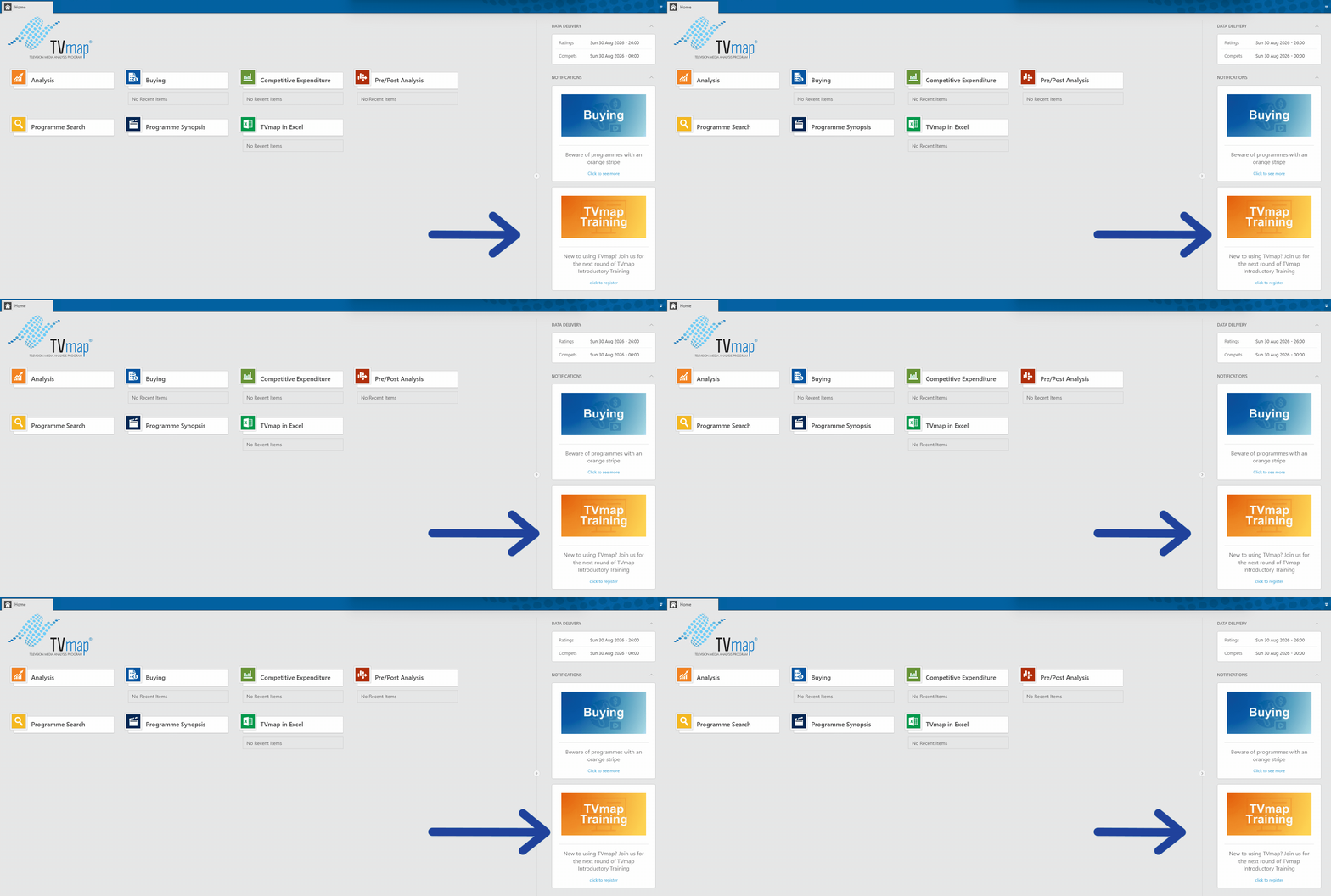
From the TVmap home page
Look for the training notification on the TVmap home page, then click the link to view the available sessions and register
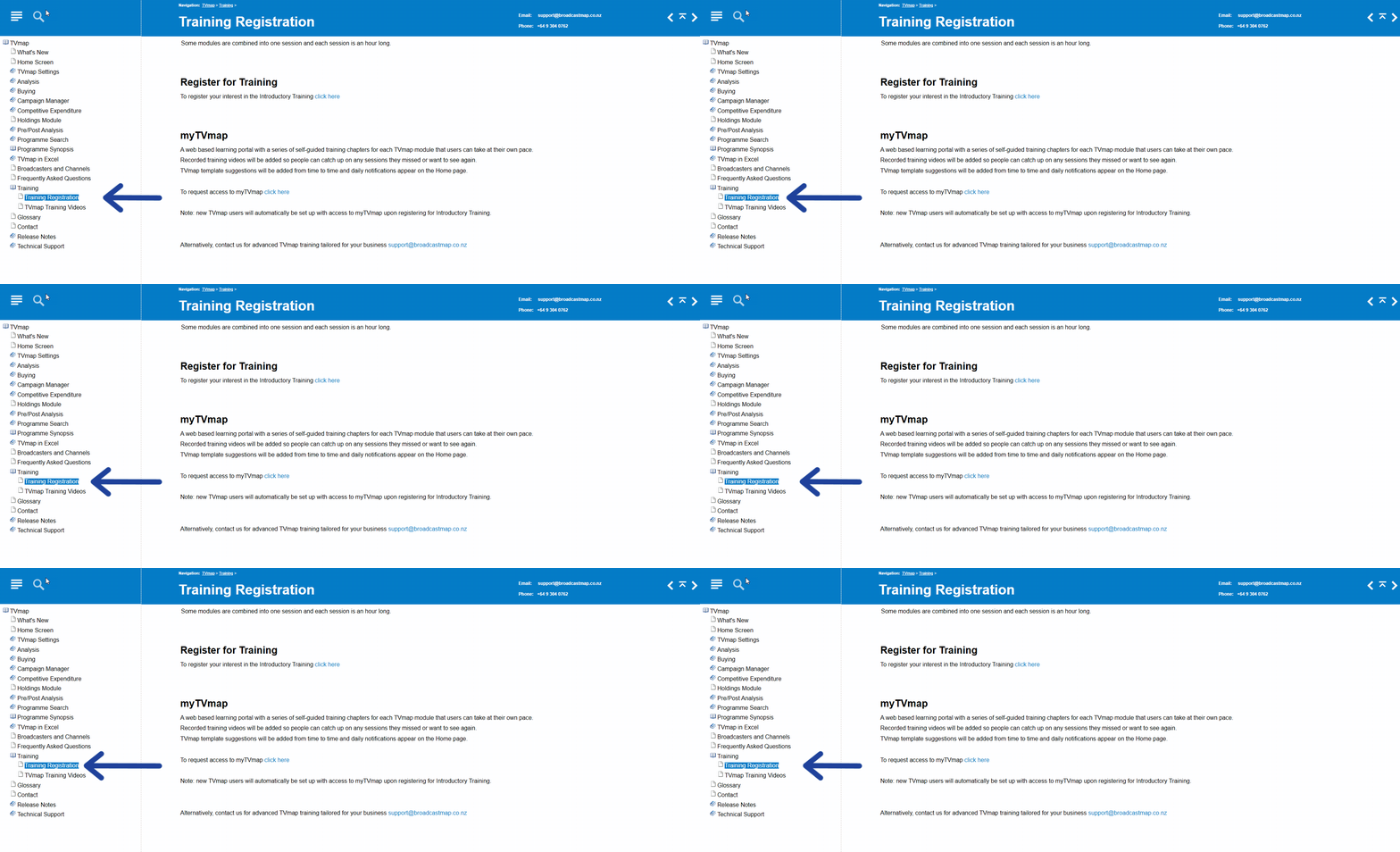
From TVmap NZ Online Help
TVmap NZ users can also access the registration page through the training link in Online Help.
From an email invitation
New users may receive an invitation directly from our Support team.
Key contacts at your organisation will also receive an email with a registration link, which they can share with the wider team.
Australia
September
VOZ Reach Curves Module
Tuesday, 15 September | 11 AM - 12 PM AEST
VOZ Campaign Analyser Module
Wednesday, 16 September | 11 AM - 12 PM AEST
VOZ Analyser
Tuesday, 22 September | 11 AM - 12 PM AEST
VOZ Program Analyser
Wednesday, 23 September | 11 AM - 12 PM AEST
VOZ CPT and CPM Analysis (Standard TVmap Excel Workbook)
Thursday, 24 September | 11 AM - 12 PM AEST
Total TV Planning Optimiser Module
Wednesday, 30 September | 11 AM - 12 PM AEST
Other ways to register
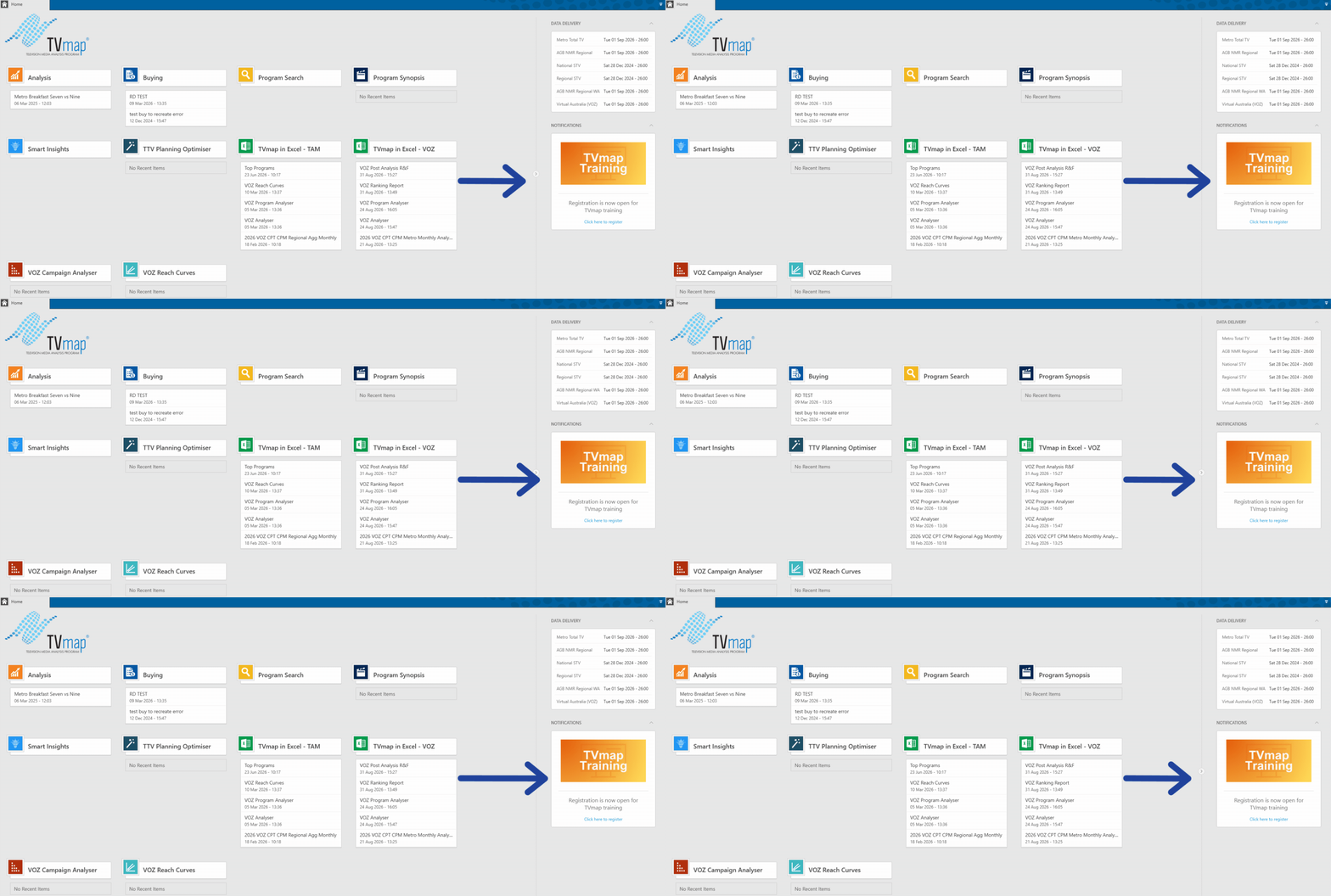
From the TVmap home page
Look for the training notification on the TVmap home page, then click the link to view the available sessions and register